
The below recovery activities support the Atlantic Whitefish recovery strategy and action plan prepared by Fisheries and Oceans Canada in consultation with partners.
BREEDING PROGRAM
While adults cannot be found in the wild, a few wild larvae were found and kept in captivity to start a breeding program in the Aquatron of Dalhousie University

The future goal will be to return captive-bred adults to the wild in hopes that eventually they can be self-sustaining.
ELECTROFISHING
The invasive species pose a serious threat to the survival and recovery of the Atlantic Whitefish.
Efforts are being made to remove invasive smallmouth bass and chain pickerel from the watershed and evaluate the effectiveness of different removal methods.
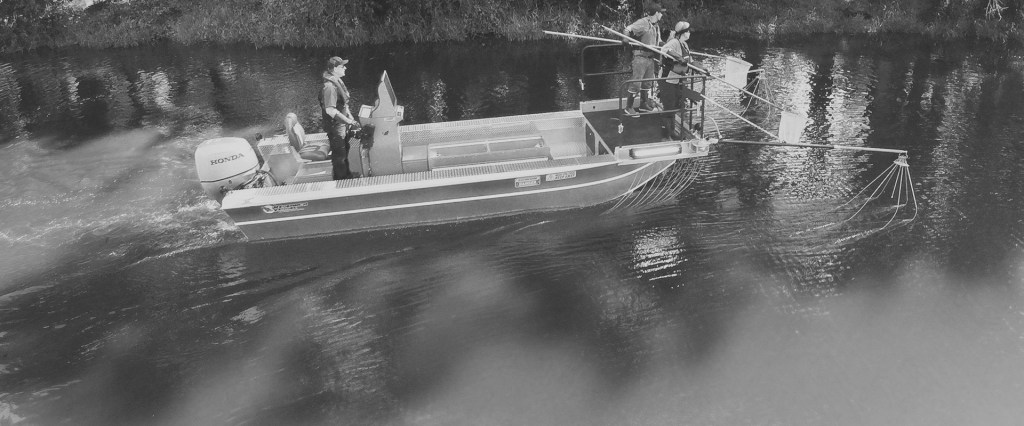
In Milipsigate alone, nearly 1,200 invasive pickerel and smallmouth bass were removed in 2018.
DFO and Coastal Action have active programs to remove invasive from Atlantic Whitefish habitat. We hope we will to be able to support their efforts with manpower and with money raised via this website.
eDNA RESEARCH
eDNA analysis involves collecting genetic material that is shed into the environment from living organisms (skin, eggs/sperm, fluids, etc). DNA present in the samples is extracted and analysed using molecular genetic techniques.

eDNA techniques should be very helpful to detect Atlantic Whitefish and the invasive species. However, research is needed to calibrate the technique and refine protocols. Our hope if to be able to use donations to this site to fund this eDNA research.
RESTORE ANADROMY
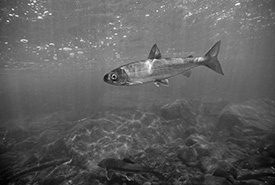
The species is anadromous by nature, but dams built in the 1800s blocked their access to the sea. Fortunately, efforts are underway to facilitate anadromy on the Petite Rivière by improving fish passage. Progress has been made in other locations – in 2012, a fish ladder was built at the Hebb Lake dam. This dam provided the Atlantic Whitefish with access to the Atlantic ocean, after they were blocked for a century.
The Petite Rivière lakes also have a small thermally bounded habitat. With rising global temperatures, there may be a decrease in lake habitat that is suitable for the Atlantic Whitefish. Restoring anadromy may also help reduce this threat, providing refuge in cooler waters.
Achieving anadromy includes the return of the anadromous run to the Tusket River, and the promotion of anadromy on the Petite Rivière.
 atlanticwhitefish.org